Features
Tenant improvements as a construction project hidden inside a lease
Tenant improvements as a construction project inside a lease: delivery condition, how an allowance is priced and paid, schedule risk, and who owns it.
Fitting out a space is where a lease turns into a construction project, and where a tenant most often discovers that a number they thought was settled was not. The improvement allowance, the delivery condition, and the schedule are all negotiable, and they are all connected to each other and to the length of the term.
The rules for the work usually live in a separate exhibit attached to the lease, called the work letter. It is shorter than the lease and easier to skip. Do not skip it.
What to take away
- The allowance is landlord capital recovered through your rent. Price it by asking for the same deal with a smaller allowance.
- Delivery condition and the schedule matter as much as the money. Tie rent commencement to substantial completion, not to a date.
- Agree what must be removed at the end while the plans are being approved, not on the day you move out.
Two ways the work gets done
Landlord-built, sometimes called turnkey. You agree a plan and a specification, and the landlord delivers the finished space. The advantage is that construction risk and cost overruns sit with the landlord. The catch is that the specification is everything: a turnkey deal built to a specification you did not read closely gives you building-standard finishes, building-standard door hardware, and the landlord's contractor's idea of adequate. Anything you assumed but did not write down will be a change order at your cost.
A building-standard specification deserves to be read line by line. Ask for the schedule the landlord's construction team actually builds to: the flooring and base, the ceiling and lighting, the power and data outlets, the HVAC capacity and operating hours, and the wall and door finishes. Building standard is a baseline, and anything you want above it becomes a change order at your cost.
Turnkey vs Tenant-Built
Landlord-built (turnkey)
- Who manages work
- Landlord
- Cost overruns
- Landlord
- Quality control
- Specification only
- Schedule risk
- Landlord
- Best for
- Ordinary office fit-out
Tenant-built with allowance
- Who manages work
- Tenant
- Cost overruns
- Tenant
- Quality control
- Tenant
- Schedule risk
- Tenant
- Best for
- Unusual requirements
Tenant-built with an allowance. The landlord contributes a sum, you manage the work, and you pay the difference. You get control over quality, sequencing, and who does the work. You also carry the overruns, the coordination, and the schedule.
Which is better depends less on the money than on whether your space is ordinary. A conventional office space fit-out is a reasonable thing to hand to a landlord. The kitchen behind a hospitality property, a lab, a clean-room, a recording space, or anything with unusual power, ventilation, drainage, or acoustic requirements is usually worth controlling yourself.
Delivery condition is half the negotiation
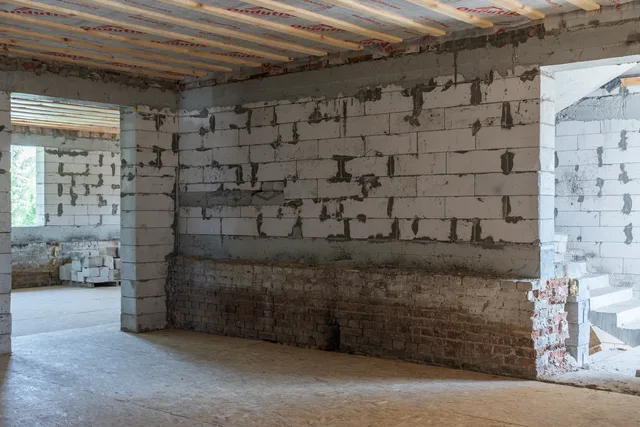
Before anyone discusses an allowance, pin down what you are being handed. "As-is" and "warm shell" and "base building" are marketing words until the lease defines them. The work letter should describe the condition of the premises on the delivery date in specifics.
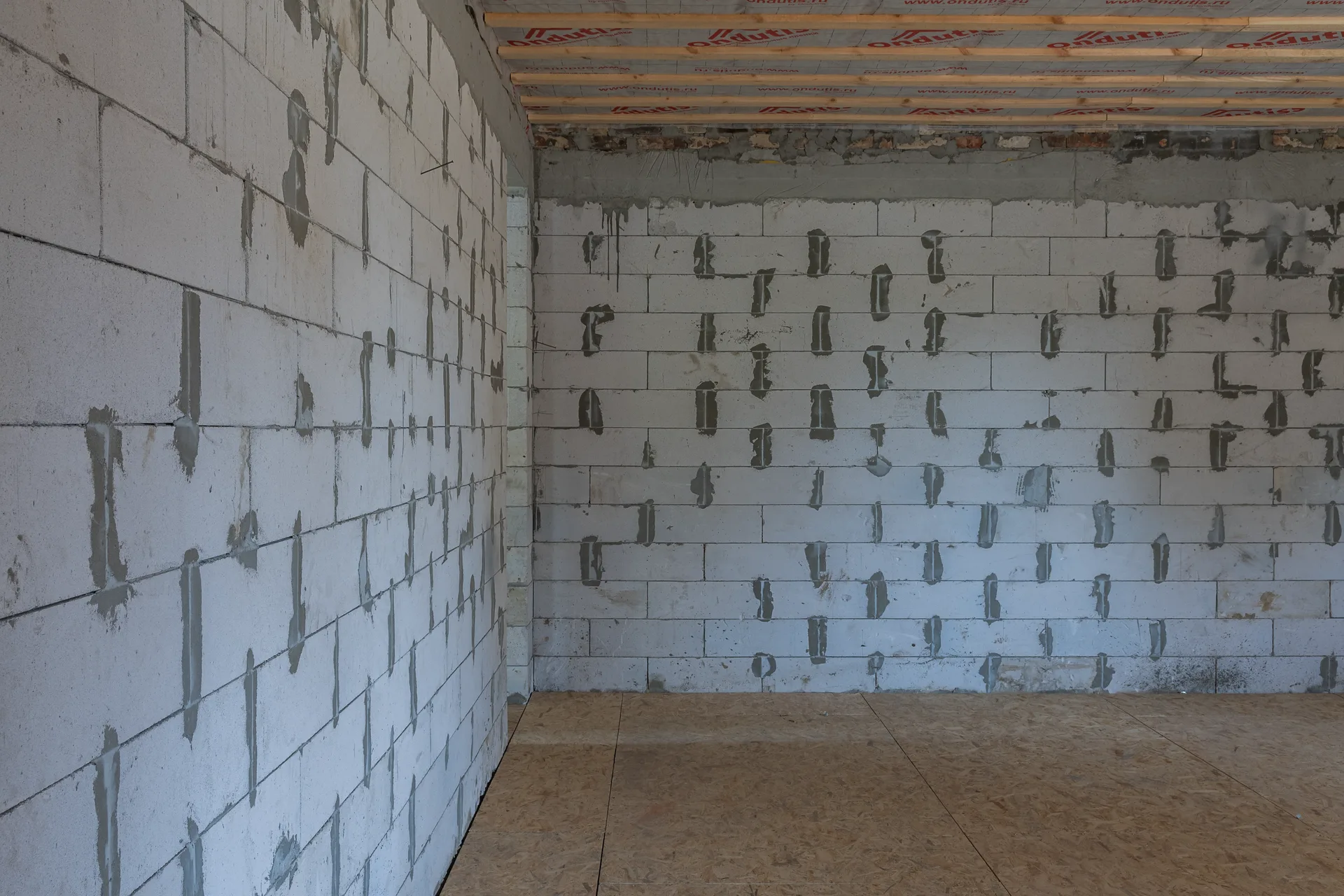
Those words have settled meanings in practice. As-is means you take the space in the condition it is in, with no landlord work. Warm shell usually means a weather-tight space with structure, roof, exterior walls and the base building services — electrical service, and often HVAC and sprinkler mains — but no ceiling, flooring, lighting or interior partitions. Base building means the core, shell and systems the landlord delivers to every tenant, against which your fit-out is measured. Ask for the definition the landlord's construction team uses, not the one in the leasing brochure.
Questions that belong in writing:
- The condition of the base building systemsroof, HVAC, plumbing, electrical service and panel capacity, sprinkler, alarm and life-safety systems.
- The ceiling, floor slab and column grid, the floor loading limit, and which ceiling, lighting and floor finishes, if any, are already in place.
- Whether the space is separately metered for electricity, gas and water, and who pays for utilities during construction.
- The demised and rentable areas, and how each is measured.
- Which existing improvements stay, which must be removed, and who pays for that removal.
- The delivery date, the landlord's work list, and what happens if the landlord misses the date.
Delivery Condition Checklist
- Building systems delivered and to what point
- Electrical service adequate for equipment
- HVAC state and first-months responsibility
- Sprinklers, exits, fire alarm for layout
- Demolition of previous tenant's work
- Known permit-stalling conditions
A landlord's representation that the systems are in good working order on delivery, with a period during which the landlord fixes anything that turns out not to be, is a reasonable and commonly agreed ask.
The allowance is financed, and how to price it
A landlord funding your fit-out invests capital and expects to recover it over the lease term. What is built with it may become part of the property, the question behind a fixture.
Pricing the Allowance
- Ask for same deal at smaller allowance
- See how much rent falls
- Ask again at zero allowance
- Compare effective rate to bank financing
That is why allowance and term length trade against each other, and why an allowance is not free money.
Price it by asking for the same deal at a smaller allowance, then see how much the rent falls; ask again at zero.
The difference shows the effective rate you pay to borrow from your landlord, and whether your bank is cheaper. Sometimes the landlord's money is the cheapest capital for a young business, and sometimes it is not.
Some structures make the arithmetic explicit: the landlord funds an additional amount, and you repay it as "amortized additional rent" over the term at a stated rate. This is clearer than hiding it in base rent and helps you compare other financing.
If you default or leave early, the unamortized balance is usually due, often within reach of a personal guarantee, which is governed by state law. See commercial leasing for what a guarantee covers.
What the money can be spent on
Allowances are commonly restricted to hard construction costs attached to the building. The things a business actually needs to open often are not.
Try to get eligibility extended to as many of these as the landlord will accept: design and engineering fees, permit and plan-review charges, low-voltage cabling, security and audiovisual equipment, furniture, signage, and moving costs.
Eligible Allowance Costs
- Architectural and engineering design fees
- Permit and plan review costs
- Data and low-voltage cabling
- Security, access control, audiovisual systems
- Furniture, equipment, signage
- Moving costs
- Unspent balance against rent
Check what is taken out of your allowance before you see it. A landlord construction management or supervision fee is normal.
A large one funded from your allowance cuts what you can build. Ask what the fee is, what it buys, and whether it is charged on the whole project cost or only landlord-managed work.
And ask what happens to money you do not spend. Silence usually means the landlord keeps it, which creates an incentive to spend the balance on things you do not need in the last week of the project.
How the money actually reaches you
Cashflow kills more fit-outs than budgets do. A reimbursement structure means you pay contractors first and get repaid on completion of the whole project, so you need to carry the entire cost for months. Progress payments against draw requests are much easier to live with.
Draws are made against a draw request. On most commercial projects that is the AIA G702 Application and Certificate for Payment with its G703 Continuation Sheet, though some landlords use their own form. Every state has a mechanic's lien statute, and an unpaid contractor or supplier can file a lien against the property, which is why a landlord will require a conditional lien waiver from each trade with every draw and a final unconditional waiver before the last payment. Retainage held back until the work is complete is normal; the questions are who holds it and when it is released.
Establish before signing:
Payment Terms to Establish
- Progress draw or single reimbursement
- Documentation triggering payment and timing
- Required lien waivers and from whom
- Site safety responsibility named
- Holdback until punch list closed
- Certificate of occupancy as payment condition
Late allowance payments are common enough that a right to offset unpaid amounts against rent, after notice, is worth asking for.
The schedule is the risk
Rent usually starts on a date, not on the day you open. Every week of design revision, permit review, long-lead equipment, or landlord delay is a week you may be paying for an empty space, or paying rent in two places at once.
Schedule Risk Protections
- Tie rent start to substantial completion
- Late landlord delivery pushes rent day for day
- Right to terminate past outside date
- Size free rent to realistic timeline
- Identify long-lead items early
Permitting timelines are set by your local building department, the authority that issues the permit and the certificate of occupancy, and are outside both parties' control. The sequence is usually the same: a permit set of drawings, plan review, a building permit, inspections at rough-in and at final, and a certificate of occupancy — or a temporary certificate of occupancy — before you can legally open. Find out how long plan review takes locally before you agree an outside date; the zoning and permits page covers who to ask.
The drawings themselves have to satisfy the code your jurisdiction enforces, which is almost always a version of the International Building Code (IBC) with local amendments, the accessibility rules of the Americans with Disabilities Act (ADA) and the state or local accessibility code, and the fire and life-safety requirements set out in your local fire code and the Life Safety Code (NFPA 101). That is why a landlord will not simply let you build what you want, and why plan review takes the time it does.
Change orders
Every change order is a negotiation you enter from a weak position, because the contractor is already on site. Reduce their number by resolving the specification before construction starts, and control the ones you cannot avoid.
Change Order Controls
- Resolve specification before construction
- Agree pricinglabor, markup, overhead
- Require written approval before work
- Keep running cost and schedule log
- Pre-construction investigation of disturbed areas
Agree in advance how a change order is priced, covering labor rates, markup on subcontracted work, and overhead, rather than accepting a lump sum later. Require written approval before work proceeds. Keep a running log of cost and schedule impact rather than discovering both at the end.
The most expensive changes are usually discoveries rather than preferences: conditions above the ceiling, in the slab, or behind a wall that nobody surveyed. A pre-construction investigation of the areas you plan to disturb costs little and prices a risk that would otherwise land mid-project.
Who owns it at the end
Improvements attached to the building generally become the landlord's at the end of the term. That is normal. The problem is the opposite obligation: a clause requiring you to remove your improvements and restore the premises.
Restoration Obligation Limits
- Get written removal list at plan approval
- Narrow general restoration to later additions
- Exclude items built with landlord allowance
- Address cabling removal explicitly
Restoration can be expensive and arrives at the point when a business is least able to absorb it. Removing a mezzanine or a rack system from industrial space is the extreme case, but a fitted office generates the same argument in miniature. Deal with it during negotiation, not during move-out:
- Ask for the landlord's written agreement, at the time the plans are approved, listing what must be removed and what may stay.
- Ask for a defined cap on restoration cost, or for a landlord-funded restoration allowance, so the number is settled when you sign rather than on the day you leave.
- If a general restoration obligation stays in, narrow it to items you specifically add later, and exclude anything built with the landlord's allowance.
- Get any obligation to remove cabling addressed explicitly. It is a routine surprise.
Protecting the investment you just made
A fit-out is a sunk cost tied to one address. Before you spend on it, confirm that the lease does not let the landlord take that address away. Demolition, redevelopment and relocation clauses can end or move a tenancy on notice, and a lender's foreclosure can put a lease at risk without a non-disturbance agreement in place.
Protect Your Fit-Out Investment
- Check demolition, redevelopment, relocation clauses
- Require non-disturbance agreement
- Reimbursement of unamortized improvement cost
- Moving and rebuilding costs covered
- Notice period long enough to rebuild
If those clauses survive negotiation, they should at least carry reimbursement of the unamortized cost of your improvements, plus moving and rebuilding costs, and a notice period long enough to find and build somewhere else.
Closing the project
Do not let the last ten percent drift. Walk the space with your architect or project manager and write a punch list before you accept the work. Confirm what your acceptance means in the work letter, because in some drafts occupying the space is deemed acceptance of everything, including defects you have not found yet.
Project Closeout Package
- Walk space and write punch list
- Confirm what acceptance means in work letter
- As-built drawings and equipment manuals
- Warranties and their start dates
- Air balance and commissioning reports
- Subcontractor contacts
- Permits and final inspection sign-offs
Collect the closeout package while people still answer the phone: as-built drawings, equipment manuals, warranties and their start dates, air balance and commissioning reports, subcontractor contacts, and copies of the permits and final inspection sign-offs. Keep the approved plans with the lease. The next person who negotiates a renewal, an exit, or a restoration argument will need them.
A work letter is a construction contract wearing a lease exhibit's clothing. Have the same lawyer who reads the lease read it, and if the project is substantial, have someone who builds for a living read the specification.
Common questions
Is a turnkey deal better than an allowance?
It depends on how ordinary your space is. Turnkey moves construction risk to the landlord but hands them the specification, so anything you assumed and did not write down becomes a change order. Unusual space is normally worth controlling yourself.
What can the allowance be spent on?
Whatever the work letter allows, which is often only hard construction costs. Push to include design fees, permits, cabling, security and audiovisual, furniture, signage and moving, and to apply any unspent balance against rent.
Who owns the improvements at the end?
Work attached to the building generally becomes the landlord's. The expensive question is the opposite one: whether you are obliged to remove your improvements and restore the space. Get a written list of what may stay at the time the plans are approved.
What if the landlord pays the allowance late?
That is a cashflow problem you can negotiate in advance. Ask for progress draws rather than a single reimbursement, a stated payment period, and a right to offset unpaid amounts against rent after notice.
In this guide
- Tenant Improvements Requirements: Who Sets ThemTenant improvements requirements come from the landlord, municipality, insurer, and lender, with paperwork and approvals unfolding at different stages.
- Tenant improvements checklist for a commercial fit-outA tenant improvements checklist for a commercial fit-out, from lease delivery through design, permits, construction evidence, acceptance, and lease-end records.
- Tenant improvements: six budget buckets explainedTenant improvements cost planning maps six budget buckets and the separate restoration liability, focusing on cost categories rather than project estimates.
- Which document would have caught each tenant improvements mistake?Nine tenant improvements mistakes sorted by the document that would have caught each one, with the last moment every fix is still a cheap one to make.
- Tenant improvements advisers: roles, questions and signs to walk awayThe tenant improvements roles a fit out needs, the questions that expose a weak answer, signs to walk away, and common questions on comparing quotes.
- 6 lessons worth learning about tenant improvements comparisonCompare four tenant improvements routes by mechanism: who holds the contract, who carries overrun and delay, when cash moves, and who owns the work at the end.
- Seven layers make up tenant improvements rules for 2027: here is how a reviewer reads themTenant improvements rules explained as seven layers, plus how to find which code edition your own address adopted and what your lease adds on top of that.
- Tenant Improvements Review: How to Level BidsUse a tenant improvements review to compare contractor bids against the same drawings, expose scope gaps and allowances, and test schedule assumptions.